
English through language immersion
Learn English naturally – with your own Native Coach
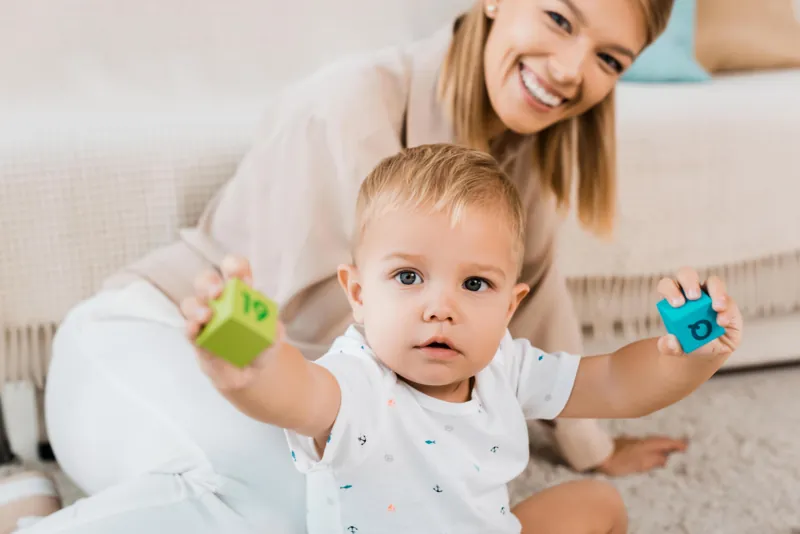
Your child learns a new language through play with their own Native Coach. No classroom setting: one afternoon a week in an English-speaking environment – at home, at the playground or at the zoo.
- from age 1 to around 10
- 1 coach : 1 child
- Vienna · Graz · Linz · Salzburg · Innsbruck
Quick answers
- What ages is it for?
- For children from age 1 to around 10. A Native Coach looks after just one child at a time, or up to three with siblings.
- How much does individual childcare cost?
- From around 500 € per month for one session a week. The exact price depends on your location, session length, frequency and number of children.
- Where does it take place?
- At your home or on little outings – in Vienna, Graz, Linz, Salzburg and Innsbruck.
- Who are the coaches?
- Native English speakers with at least basic training in education and a first-aid course. They speak only English with your child.
Explained in 2 minutes
Why native4kids?
Our two-minute video shows what makes native4kids special and why children learn English so naturally with their own Native Coach.
Watch our explainer video
The video is provided by YouTube. Data is only sent to YouTube after you agree.
Why?
Why start early?
Children can pick up English early through listening, repeating and playing, similar to how they learn their mother tongue. Research shows that an early start is worthwhile, but it is not a “deadline”. A large study with around 670,000 participants found that the ability to learn the grammar of a second language remains high until around age 17 (Hartshorne, Tenenbaum & Pinker, 2018). Starting early mainly means more time, more contact with the language and more enjoyment.
According to research, the key factors for success are the amount and quality of contact with the language, often more than starting age alone (Genesee, 2014). This is exactly where we come in: regular, playful contact with a native English speaker.
An expert report from the German Youth Institute confirms this: young children can fully acquire two languages in an age-appropriate way and distinguish between them well, following the language of the person they are speaking to. Whether a language becomes stronger or weaker depends mainly on how much contact a child has with it (Reich, 2010).
Concerns about the first language suffering have also been extensively studied in school immersion programmes: children develop strong skills in their second language without any apparent disadvantage to their first language (Genesee, 1983; Cummins, 2000).
Our approach
Language immersion
We follow the principles of immersion research: your child spends as much of their time with the coach as possible in an English-speaking environment. Our Native Coaches speak and understand only English with your child. This gives your child a genuine reason to speak English themselves, much like a baby learning their mother tongue.
Our coaches grew up in an English-speaking country or have lived there for at least 10 years. This matters to us because the quality of language input influences language acquisition (Unsworth et al., 2019).
- Our Native Coaches look after just one child at a time (up to 3 with siblings) – never groups.
- We find the right coach for your son or daughter – like an English-speaking family friend, week after week.
Please note: immersion studies mainly examine school programmes with significantly more contact time. Our approach applies their principles to weekly one-to-one childcare.
How it works
Everything organised – so you can relax
From collection to updates: our approach is built on long-term, dependable childcare.
Collecting your child
Arranged to suit you: from kindergarten, school, after-school care, sports or home. With a text message confirmation if you wish.
Activity programme
For children from around age 4, we plan outdoor activities together: sport, culture, parks, museums and zoos.
Safety
We always know where your coach and child are. In case of illness, you choose: a replacement coach or a catch-up session at no extra charge.
Updates & photos
What did we do and where did we go? Photos and updates through our communication platform – where you also arrange the next sessions.
Progress
We do not follow a school curriculum, so each child progresses at their own pace, often in bursts. Progress depends mainly on how regularly and for how long your child experiences English, rather than age alone. With older children, we include more schoolwork (class exercises, homework and tests).
More options
Ski or beach holidays, weekend outings, city breaks, birthday parties or summer parties – simply add them when needed.
We will find the right coach for your child.
Tell us your child’s age, your location (postcode) and preferred times – we will calculate your personal offer and send it to you in no time.
Sources
- Hartshorne, J. K., Tenenbaum, J. B., & Pinker, S. (2018). A critical period for second language acquisition: Evidence from 2/3 million English speakers. Cognition, 177, 263–277. https://pmc.ncbi.nlm.nih.gov/articles/PMC6559801
- Genesee, F. (1983). Bilingual education of majority-language children: The immersion experiments in review. Applied Psycholinguistics, 4, 1–46. https://core-prod.cambridgecore.org/core/journals/applied-psycholinguistics/article/an-invited-article-bilingual-education-of-majoritylanguage-children-the-immersion-experiments-in-review/D485FFE7A386EE8B652B2BC22980740C
- Genesee, F. (2014). Is early second language learning really better? Babylonia, 1, 26–30.
- Cummins, J. (2000). Immersion Education for the Millennium: What we have learned from 30 years of research on second language immersion. https://archive.carla.umn.edu/cobaltt/modules/strategies/immersion2000.html
- Reich, H. H. (2010). Frühe Mehrsprachigkeit aus linguistischer Perspektive. München: Deutsches Jugendinstitut. https://www.dji.de/fileadmin/user_upload/bibs/672_Reich_Expertise_Mehrsprachigkeit.pdf
- Unsworth, S., Brouwer, S., de Bree, E., & Verhagen, J. (2019). Predicting bilingual preschoolers' patterns of language development: Degree of non-native input matters. Applied Psycholinguistics, 40(5), 1189–1219. https://pure.uva.nl/ws/files/48951743/predicting_bilingual_preschoolers_patterns_of_language_development_degree_of_nonnative_input_matters.pdf